

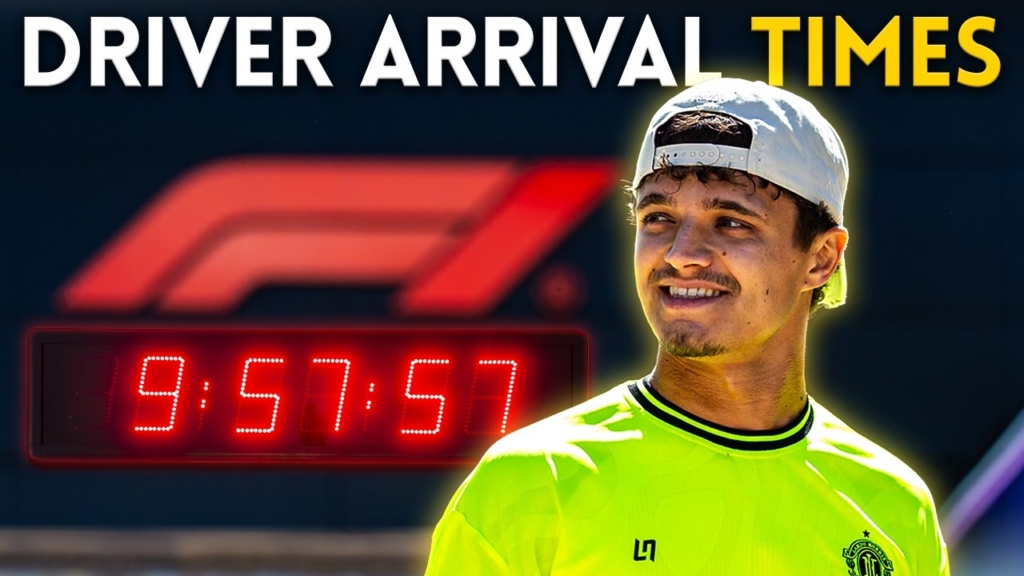
F1 driver arrival times are one of the biggest mysteries of a Grand Prix weekend. The short answer is that there is no single time. A driver’s schedule is dictated by their first commitment at the circuit, whether that is media, a team meeting, a fan appearance, or track running.
At the 2026 Italian Grand Prix, the Monza paddock provided a rather useful real world case study. On media day, the first driver arrived at 9:18 a.m. and the final arrival was at 1:07 p.m.. That is a total window of 3 hours and 49 minutes.
Monza Media Day: Every F1 Driver Arrival Time
Kimi Antonelli was first through at 9:18 a.m., arriving with a police escort and taking the time to thank the officers. Lewis Hamilton followed at 9:35 a.m. in an arrival that was rather more memorable than usual.

Here is how the 22 drivers arrived across the day:
- 9:18 a.m.: Kimi Antonelli
- 9:35 a.m.: Lewis Hamilton
- 10:04 a.m.: Arvid Lindblad
- 10:07 a.m.: Sergio Pérez
- 10:08 a.m.: Gabriel Bortoleto
- 10:17 a.m.: Charles Leclerc
- 10:21 a.m.: Oliver Bearman
- 10:29 a.m.: George Russell
- 10:31 a.m.: Valtteri Bottas
- 10:40 a.m.: Nico Hülkenberg
- 10:43 a.m.: Esteban Ocon
- 10:47 a.m.: Pierre Gasly
- 10:51 a.m.: Franco Colapinto
- 10:56 a.m.: Yuki Tsunoda
- 11:09 a.m.: Oscar Piastri
- 11:19 a.m.: Carlos Sainz
- 11:22 a.m.: Lando Norris
- 11:30 a.m.: Liam Lawson
- 12:08 p.m.: Alex Albon
- 12:28 p.m.: Fernando Alonso
- 1:00 p.m.: Lance Stroll
- 1:07 p.m.: Max Verstappen
The busiest period was clearly from 10:00 a.m. to 11:00 a.m., when 12 drivers arrived. Just 2 were in before 10:00 a.m., 4 arrived between 11:00 a.m. and noon, and the final 4 came after midday.
Lewis Hamilton Arrives in a Ferrari F40
Hamilton’s 9:35 a.m. arrival was the standout moment of the morning. Rather than being driven to the track by one of his crew, he drove himself in a red Ferrari F40 that had been restored by the Ferrari factory in Maranello.
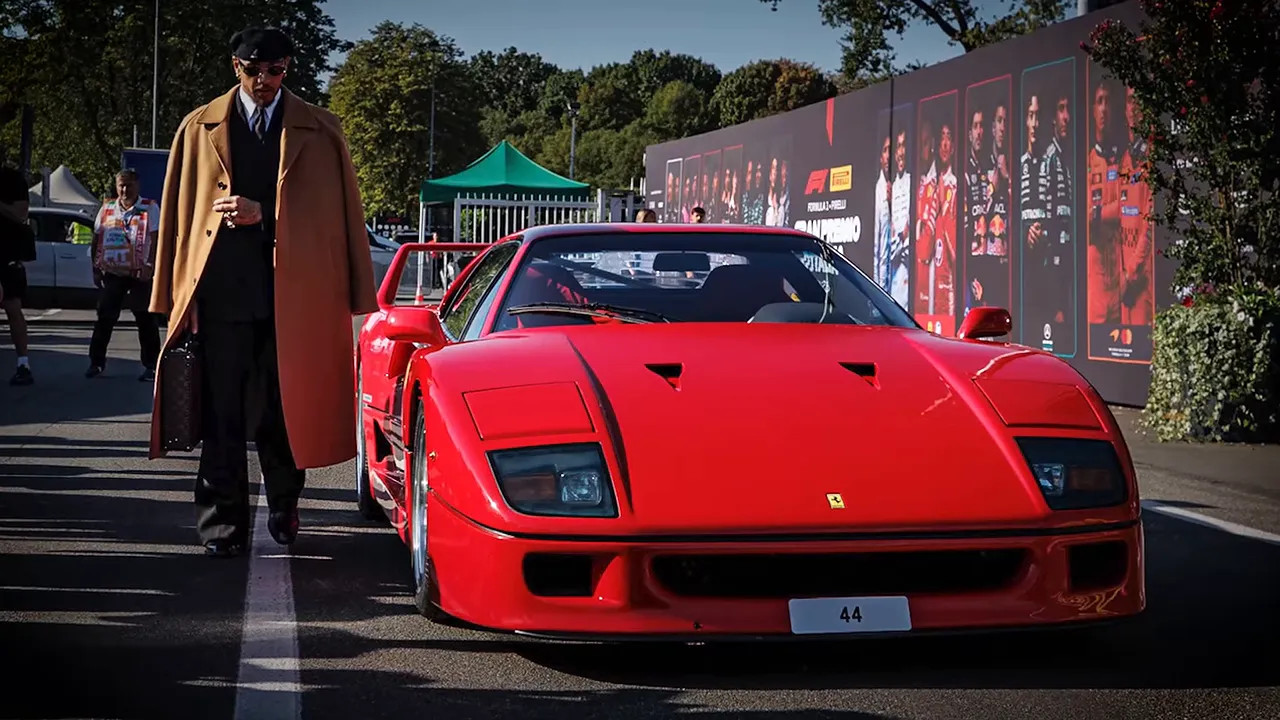
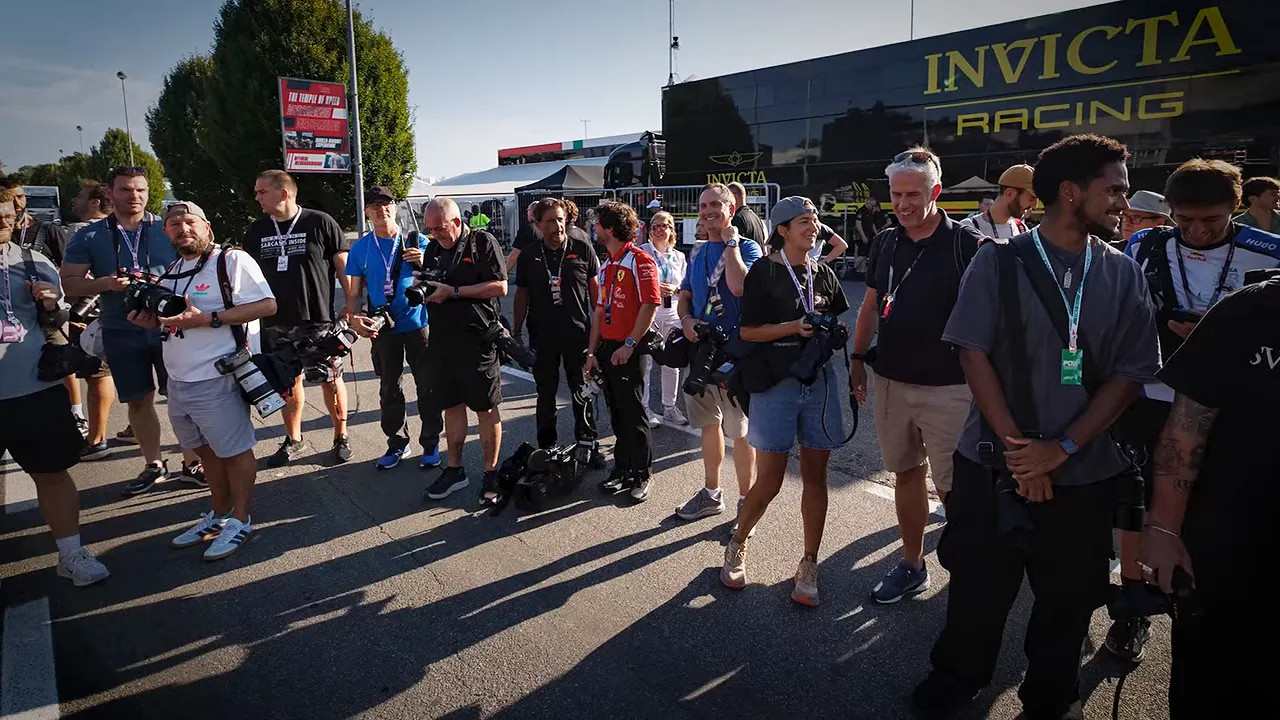
He stepped out in a long overcoat, Kangol hat and carrying a Louis Vuitton briefcase, despite the warm morning. He then posed at the rear of the car for his crew before giving the substantial media group at the front of the paddock a few minutes of photographs.
Hamilton later noted that, to the best of his knowledge, no Ferrari F1 driver had previously driven an F40 to the circuit. It was a fitting moment at Monza. Only around 1,300 F40s were built, and examples are now valued at more than US$3 million. Reportedly, Hamilton’s car was found after sitting in a garage for more than 30 years, with engine number 44, a rather remarkable match for his racing number.
Why F1 Driver Arrival Times Vary So Much
The key determinant is simple: what does the driver need to do first?
On media day, a driver whose first obligation is a 1:30 p.m. press conference may not need to arrive until around 1:00 p.m. That is why Max Verstappen could be the final arrival at 1:07 p.m., while Antonelli was on site before 9:20 a.m.
There are also practical details that change the picture. Hülkenberg used the fire entrance rather than the main gate, giving him a shorter walk and allowing him to bypass much of the waiting media. Liam Lawson flew commercial and came directly from the airport to the circuit. Bottas arrived before he had team kit ready, prompting an assistant to rush out with a shirt and hat.
Even when several drivers appear in quick succession, the timing is not coordinated for the benefit of anyone waiting at a gate. It is individual, schedule-driven and often shaped by travel arrangements or team requirements.
When to Arrive at an F1 Track if You Want to See Drivers
Anyone hoping to catch drivers entering the paddock needs patience. At Monza, seeing every driver on media day would have required nearly 4 hours at the right entrance, and that still does not guarantee access to the closest arrival point.
Getting close to the place where drivers leave their cars and walk into the paddock is difficult. It generally requires a paddock pass, or access associated with F2 or F3, which operate in nearby areas. Public access points can offer glimpses, but the driver route, entry gate and security arrangements vary from circuit to circuit.
Best Timing for Practice and Qualifying Days
For a day with a session beginning at 12:30 p.m., a sensible arrival window is at least 3 hours before the session. Most drivers tend to arrive between 3 hours and 1 hour before their on-track commitment.
That places the likely window between approximately 9:30 a.m. and 11:30 a.m. for a 12:30 p.m. session. It is not exact, but it is the most practical guide available because drivers can have varying engineering meetings, media obligations and preparations.
Best Timing for Race Day
Race day is different. Drivers have longer preparation schedules, final briefings and more substantial pre-race commitments. The recommended window is 6 hours to 3 hours before the race start.
For a 3:00 p.m. race, that means being in position from around 9:00 a.m. until noon. It is a long time, but race day is not the day to arrive late and hope to catch every driver.
More Monza Paddock Notes
The arrival line at Monza was not the only interesting activity in the paddock. Liam Lawson’s weekend was particularly uncertain before an afternoon announcement confirmed that he would remain with Red Bull, while Yuki Tsunoda stayed with Racing Bulls because Isack Hadjar was not fit to drive.
Lawson explained that he had been working with both groups of engineers during the week because he did not know which car he would be driving. A later seat fitting in race gear underlined just how fluid the situation had been.
Elsewhere, Jack Doohan was in the paddock ahead of a planned Haas test in mid-September. A strong showing could put him into consideration for a future Haas drive, with the team yet to settle its 2027 line-up.
Franco Colapinto also arrived at Monza with an Alpine drive for 2027 confirmed. He had scored points in 6 of the first 12 races, and although he trailed Pierre Gasly 44 points to 19, the pair had helped lift Alpine to sixth in the Constructors’ Championship, just 3 points behind Racing Bulls.
Why Every Team Moved Its Pit Box Back
One of the more unusual Thursday jobs at Monza involved every team moving its pit box markings back by 1 m. These markings establish where a driver positions the car in front of the garage, based on the designated front axle location.
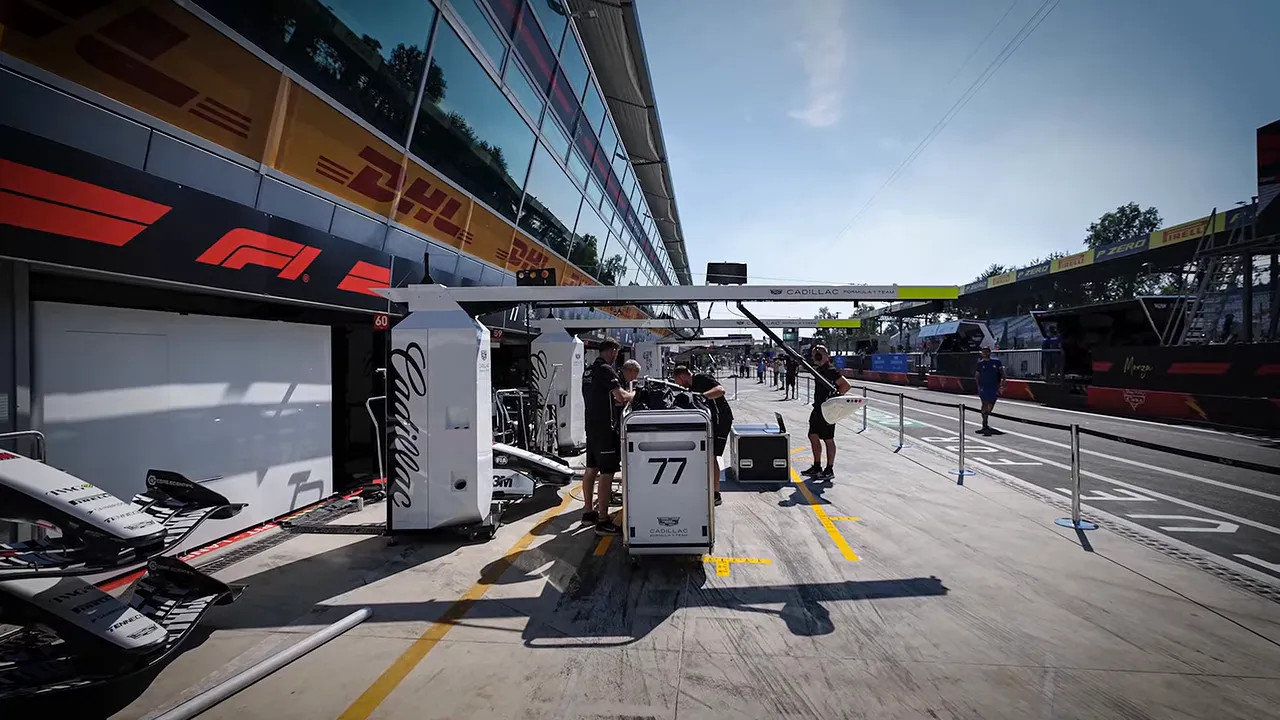
The reason given was that Cadillac could not safely exit its pit box with the existing layout. The FIA specifies the front axle location for every team, and the revised instruction meant all teams had to adjust their markings. It was estimated to be around 45 minutes of work for each crew.
There is some flexibility in the layout. Teams can choose the skew, or angle, of their pit box. But where the front axle sits is not up to them. These details matter because a pit lane is a very confined working space, especially when several cars and crews are preparing at once.
It was not unprecedented. At Zandvoort the previous year, teams reportedly had to shift pit boxes back 4.5 m shortly before the Friday curfew. It is not glamorous work, but it is exactly the sort of behind-the-scenes adjustment that keeps a race weekend safe and functioning.
The Colapinto Penalty Debate and the Cost of Online Abuse
Colapinto’s penalties at Zandvoort also became a much larger story after the race. He had challenged the decisions, arguing that the rules should allow greater flexibility, but the penalties remained in place.

The situation escalated when Mercado Libre chief marketing officer Sean Summers published a strongly worded criticism of the stewards, questioning both their competence and honesty. The post was later removed, but not before it was followed by abuse and threats directed at FIA officials.
Alpine and Colapinto were understandably concerned by the aftermath. Alpine publicly backed the FIA and the stewards, while the FIA sought legal advice and wrote to World Rugby, where Summers sits on the board. World Rugby subsequently distanced itself from the comments.
This is bigger than one team, one driver or one fan base. F1 has seen officials, drivers and other figures targeted with threats after contentious decisions. The FIA has contacted drivers including Esteban Ocon and Kimi Antonelli following incidents of online abuse to offer support.
Disagreeing with a penalty is part of sport. Threatening people over it is not. Calling out that behaviour matters, because the sport cannot allow officials, drivers or their families to become targets whenever a decision proves unpopular.
Max Verstappen Takes on 100 Go-Karters
Another intriguing item on the calendar is Max Verstappen’s planned race against 100 go-karters at Silverstone on September 16. It is being billed as the world’s biggest go-kart race, with Verstappen set to start at the rear and work through a field of 100 competitors.
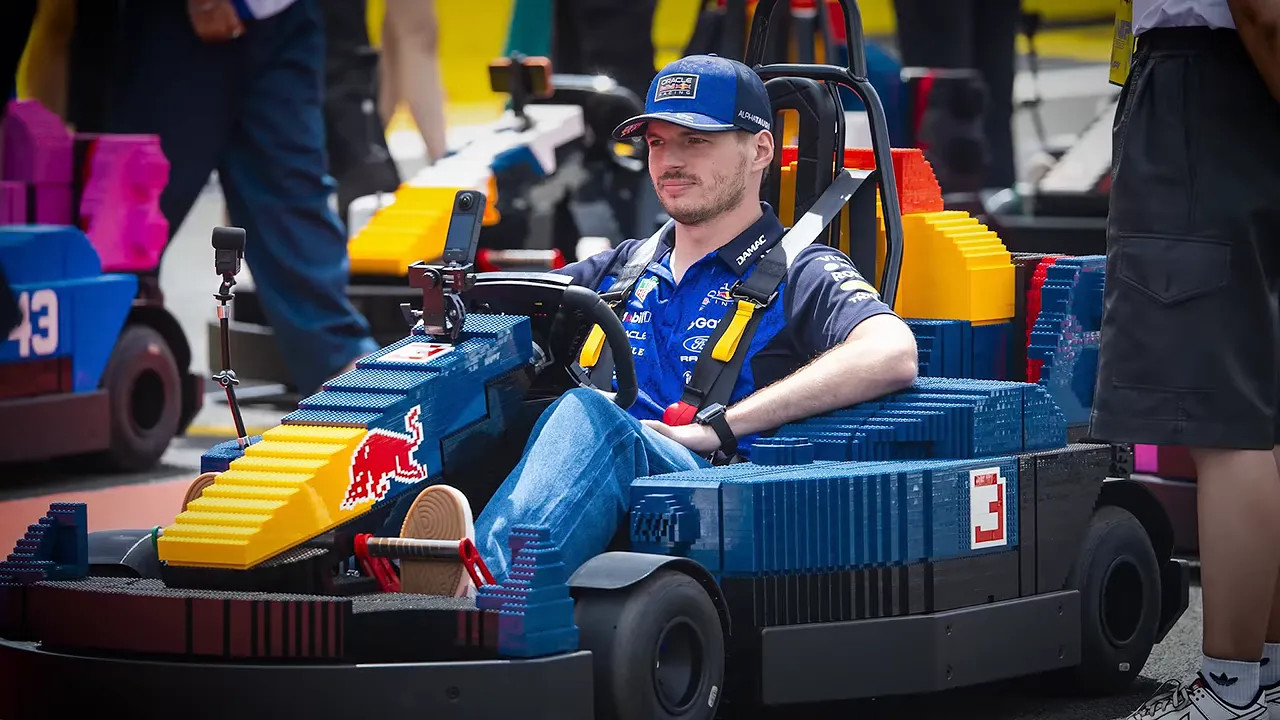
The event will use part of the Silverstone circuit converted into a kart track rather than the full Grand Prix layout. The grid includes sporting personalities, streamers and everyday karting fans from around the world.
Passing 100 karts is no small task, but Verstappen has a fairly decent chance. Karting remains one of the purest tests of race craft, and this should be a proper spectacle.
F1 Driver Arrival Times FAQ
What time do F1 drivers arrive at the track?
It depends on the day and each driver’s first commitment. On a typical practice or qualifying day, most arrive between 3 hours and 1 hour before their first session. On race day, a 6-hour to 3-hour window before the race is a better guide.
Who arrived first at Monza on media day?
Kimi Antonelli was the first driver to arrive at the 2026 Italian Grand Prix, entering the Monza circuit at 9:18 a.m.
Who was the last F1 driver to arrive at Monza?
Max Verstappen was the final arrival, reaching the circuit at 1:07 p.m.
How long would it take to see every F1 driver arrive at Monza?
On this media day, the full arrival period lasted 3 hours and 49 minutes, from 9:18 a.m. to 1:07 p.m.
Did Lewis Hamilton drive a Ferrari F40 to Monza?
Yes. Hamilton drove a restored Ferrari F40 to the Monza paddock, making a rare self-driven arrival in the classic road car.
