

Sepang International Circuit has the track, the racing and the fans to make a permanent Formula 1 return an appealing prospect. What it needs now is a much better experience around the racing.
The 2026 Bahrain Grand Prix in Malaysia exposed some serious problems: horrendous traffic, difficult access to water, long security queues and reports of food running out. None of those issues is beyond fixing. But they cannot become the accepted cost of attending a Grand Prix.
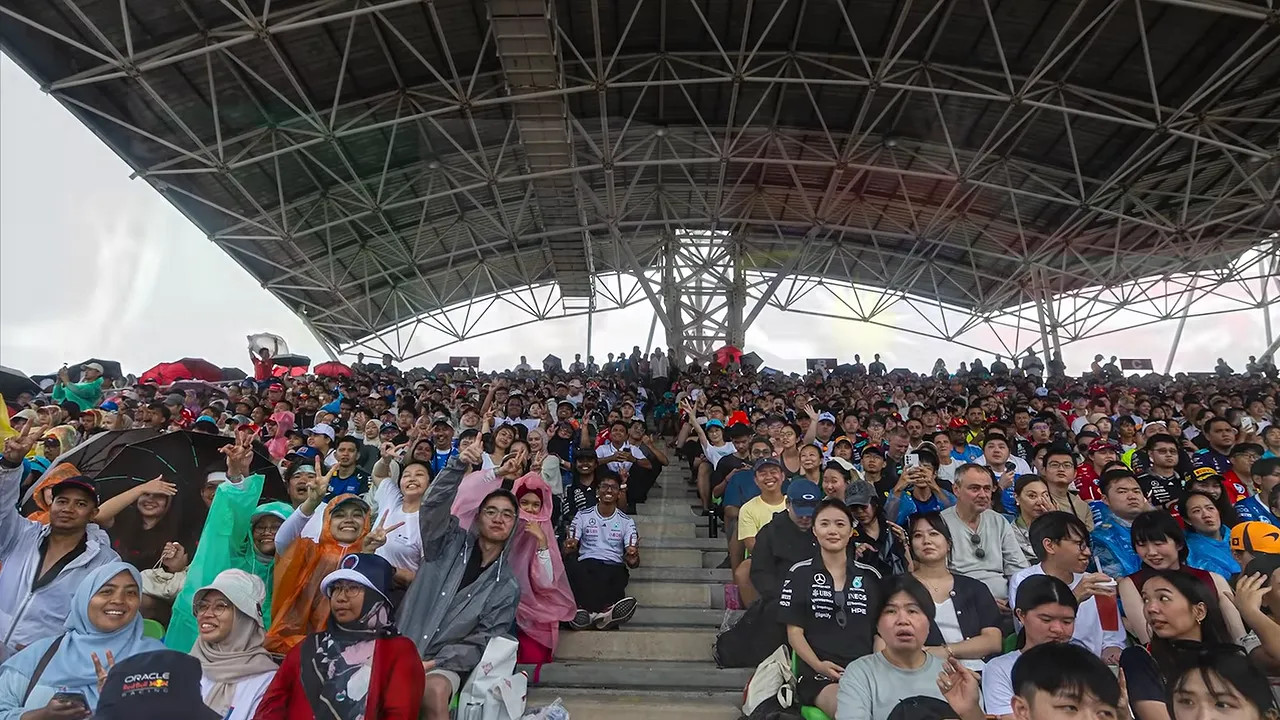
I loved the event, the photography and the enthusiasm in the grandstands. The heat was uncomfortable, sometimes very uncomfortable, but the atmosphere was something special. That makes the shortcomings all the more frustrating. There is clearly an audience here that deserves better.
1. Fix the Traffic, and Make Leaving Sepang Safe
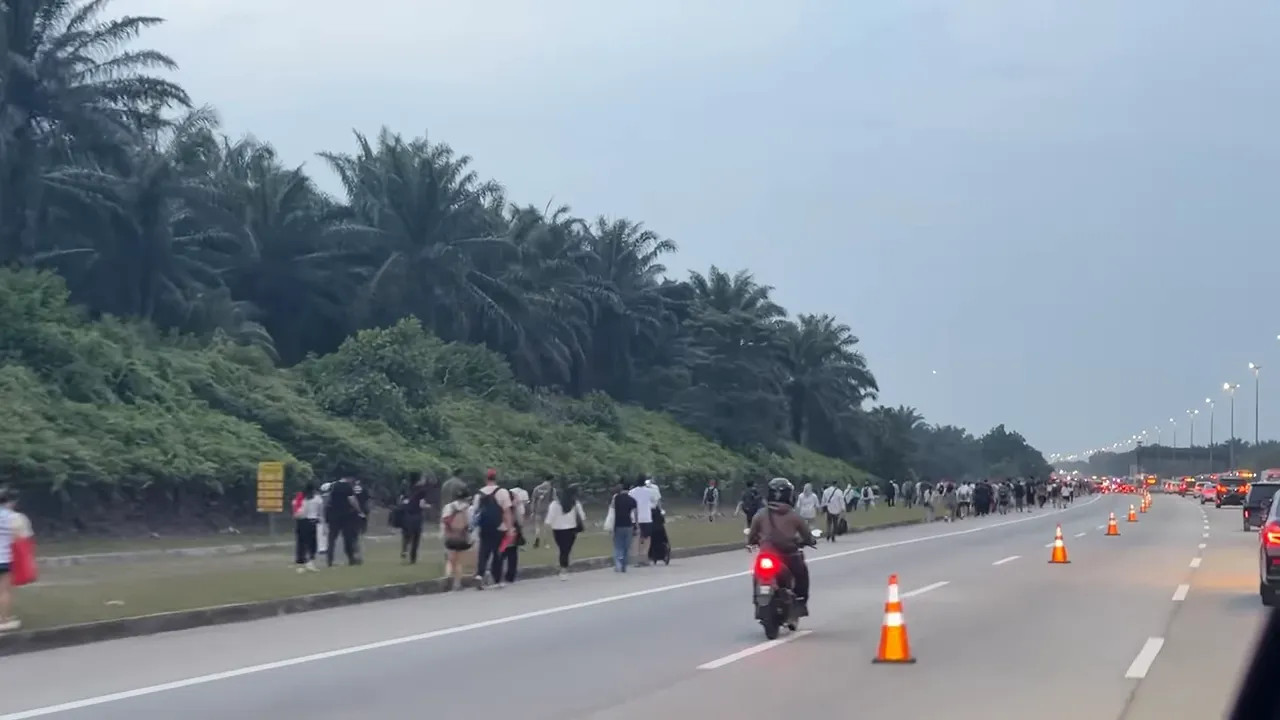
Transport is the most pressing problem, because this went beyond inconvenience. Thousands of people reportedly walked as far as 10.5 km towards hotels and shopping malls after struggling to get buses. They were not following pedestrian sidewalks. They were walking along the highway, close to moving vehicles.
One fan described waiting a couple of hours at KL Sentral, then another hour or so at the airport before continuing to the track. The whole journey from central Kuala Lumpur took roughly 5 hours. That is particularly frustrating when the organizers had encouraged people to use public transport.
Friday evening brought chaotic departures. Reports suggested Saturday improved after more buses and ground staff were added, which shows how important those resources were. Nevertheless, people were still left facing enormous queues or an unsafe walk.
Sarah Davies described police allowing VIP vehicles through while thousands of pedestrians were beside the road. She reported fast-moving cars and said the bus queues left people feeling they had no practical alternative. Several other people told me they felt police were not helping, although those accounts remain their experiences rather than a complete picture of the operation.
On Sunday evening, the traffic leaving the circuit was the worst I encountered all weekend. Police motorcycles occasionally brought drivers and their entourages through the congestion, effectively squeezing 4 lanes of vehicles into a 3-lane road.
The slow traffic made conditions less dangerous for pedestrians that evening than they had been on Saturday, when vehicles were moving faster. But slow traffic is not a pedestrian safety plan.
Would more buses solve it? Would a rail solution be needed? Those are questions the organizers need to examine properly. What is clear is that the whole journey must work, including transfers, boarding queues and departures after the final session.
I cannot imagine F1 being comfortable with a permanent proposal that effectively says this will happen on 4 nights every year. A Malaysian Grand Prix return needs a transport operation that can move the crowd safely, not simply instructions to take public transport.
2. Include Concerts in the Ticket if They Are Meant to Spread Departures
Evening concerts serve 2 purposes at a Grand Prix. They add entertainment, and they encourage some people to stay after the racing so that everyone does not leave at once.
That second benefit depends on people actually attending.
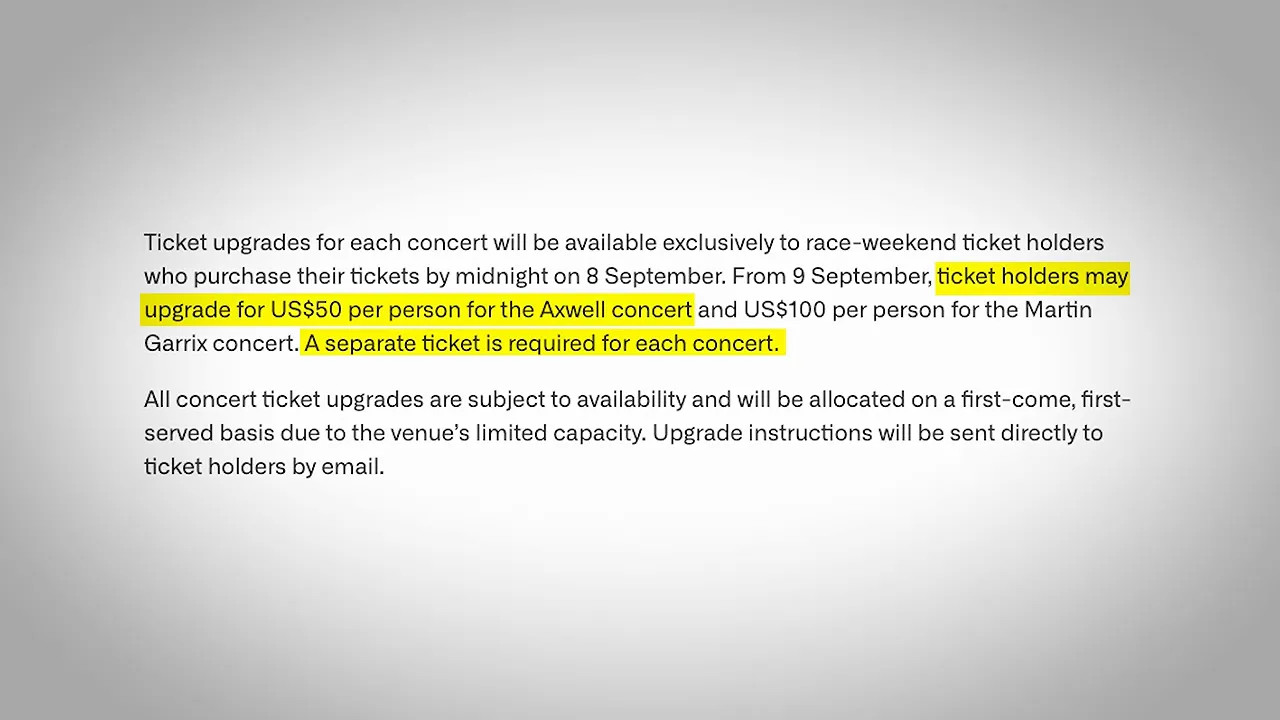
The reported attendance for Axwell’s Saturday concert was only around 30 to 50 people. Not 30,000 to 50,000. Just 30 to 50. One factor was the extra admission charge, whereas entertainment at many other Grands Prix is included in the race ticket.
A concert that attracts such a small audience cannot meaningfully ease the departure rush.
I spoke with Martin Garrix in the paddock after the race. He had heard about the small Saturday crowd, and there was also concern about a possible thunderstorm affecting his show. By about 10:00 that evening, I had not encountered thunder at the hotel or on the journey back, but I did not have a confirmed attendance figure for his performance.
Even with the possibility of people staying later, the roads were still incredibly busy.
If concerts are part of the traffic strategy, including them in the race ticket makes far more sense. Give people a reason to remain at the circuit rather than asking them to pay again before they can help spread out the evening departures. Concerts can support a transport plan, but they cannot replace one.
3. Make Water Easy to Get, Not Another Queue to Endure
Water access was a huge sticking point throughout the weekend. My most widely shared post from the event, which reached about 1.6 million views, showed piles of bottles left on the ground at an entry gate.
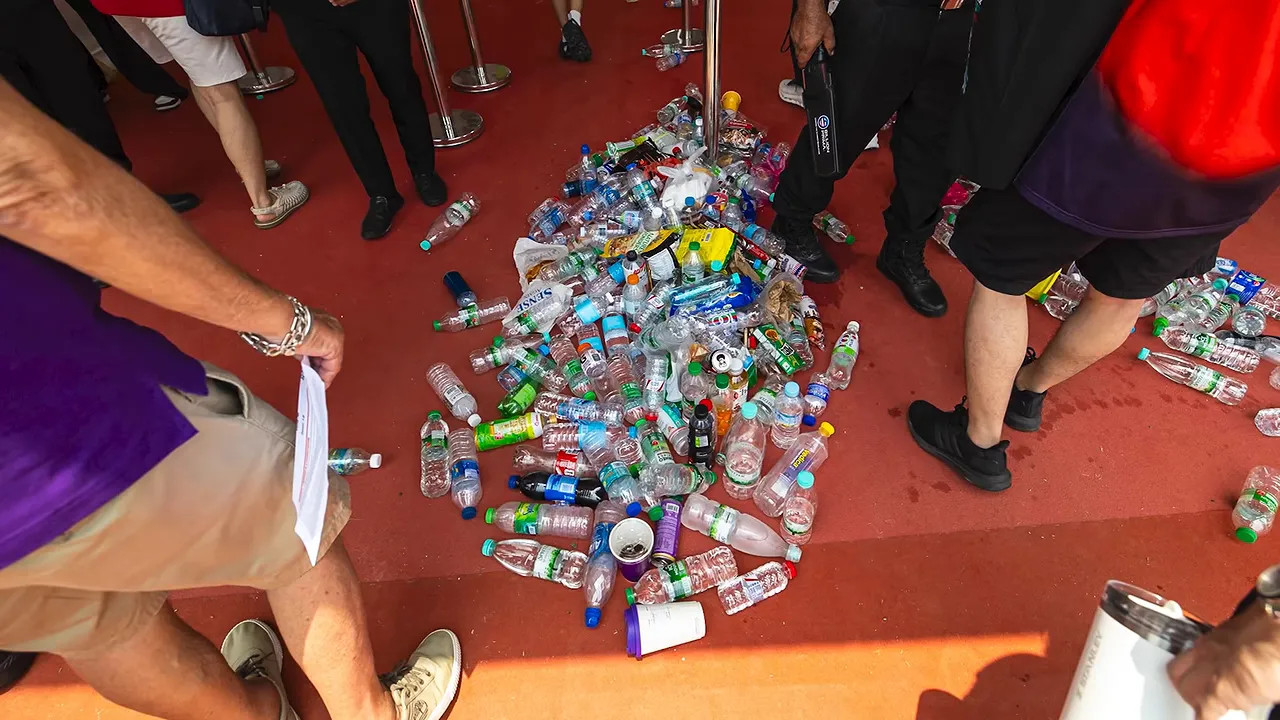
Sepang is not the first circuit to restrict incoming water bottles. I believe Monza has had restrictions in the past too. The problem is what happens after the bottles have been removed.
Reusable flasks or proper containers were apparently permitted, but fans reported too few refill stations. A refillable bottle is only useful if there is somewhere accessible to fill it.
Buying water was not necessarily an easy alternative. Reported waits ranged from 30 to 55 minutes, with complaints about too few outlets and slow payment processes.
There were also accounts of inconsistent rules between zones. One person said they bought a bottle inside the circuit, then reached another entry checkpoint and were told they could not take that same bottle into the next area. That sort of inconsistency makes an already difficult day needlessly frustrating.
In this heat, water is essential. The practical priorities are straightforward:
- Provide enough refill stations to serve the crowd.
- Keep sufficient drinking water available throughout the day.
- Add enough sales points and staff to avoid lengthy waits.
- Speed up payment where water is being sold.
- Apply clear, consistent rules across the circuit.
My preference would be to build the cost into admission. Charge a little more for the ticket and make water available without an additional payment each time. I suspect many people who spent close to an hour queuing would happily have paid in advance to avoid that experience.
One fan told me it was quicker to get a beer than a bottle of water. In a climate like this, that is not right.
4. Improve Food Supply and Security Screening
Water was not the only basic service under pressure. I heard reports of food selling out before qualifying on Saturday. Fans need to be able to buy a meal through the main sessions, not discover that supplies have already disappeared.
Getting through the gates was another bottleneck. After the journey from Kuala Lumpur, the airport transfer and the bus ride, some people reportedly faced security queues of up to 90 minutes.
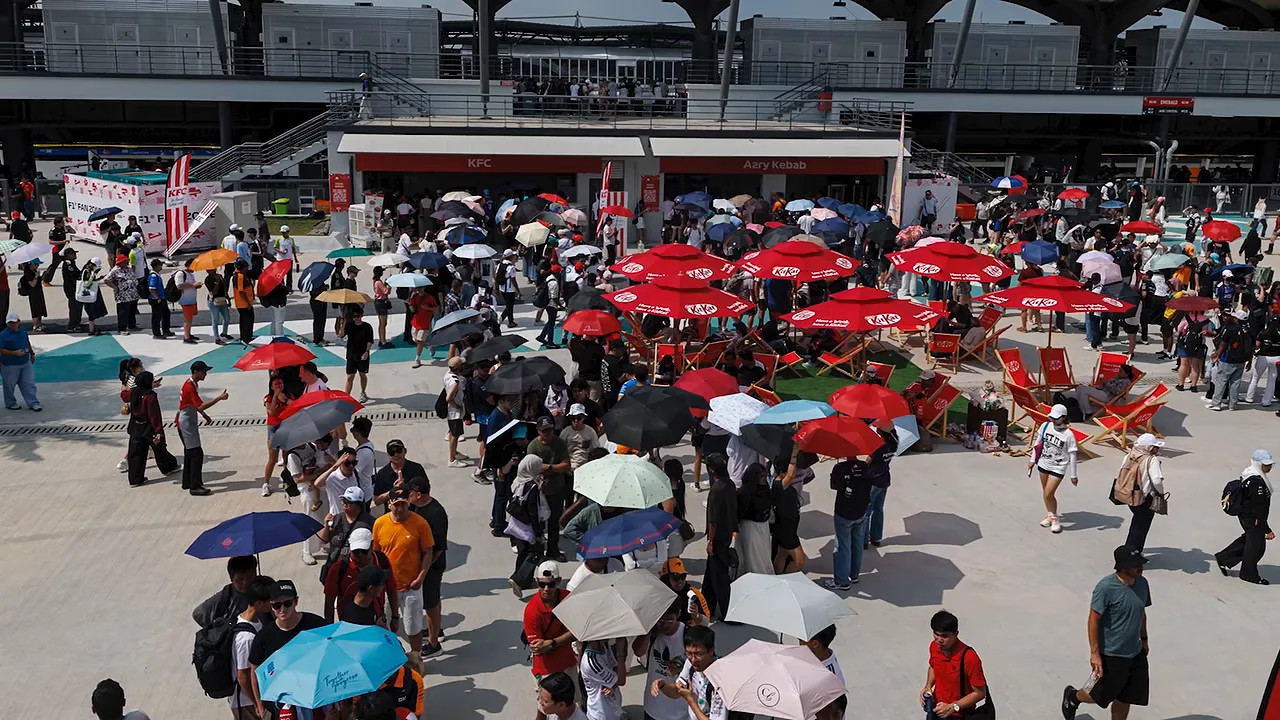
A 90-minute wait is a tough ask anywhere. In hot weather, without shade, it is much worse. It also compounds everything that has happened earlier in the day: the journey takes hours, entry takes another long stretch, then food and water require more queuing.
More entry gates and more screening staff would go a long way towards addressing that problem. Food provision similarly needs enough stock and serving capacity for the number of people attending.
These are not glamorous improvements, but they have an enormous effect on whether someone enjoys a race weekend and wants to return.
5. Plan for Malaysia’s Crowd, Not Bahrain’s Established Operation
There is important context behind the organizational difficulties. Bahrain International Circuit had just 10 weeks to put this event together. That is a short preparation window for a Grand Prix in a different market.
The established Bahrain race attracts roughly half the spectators expected for this event in Malaysia. Its organizers also have years of experience with their home venue and audience. Malaysia presented a substantially different challenge.
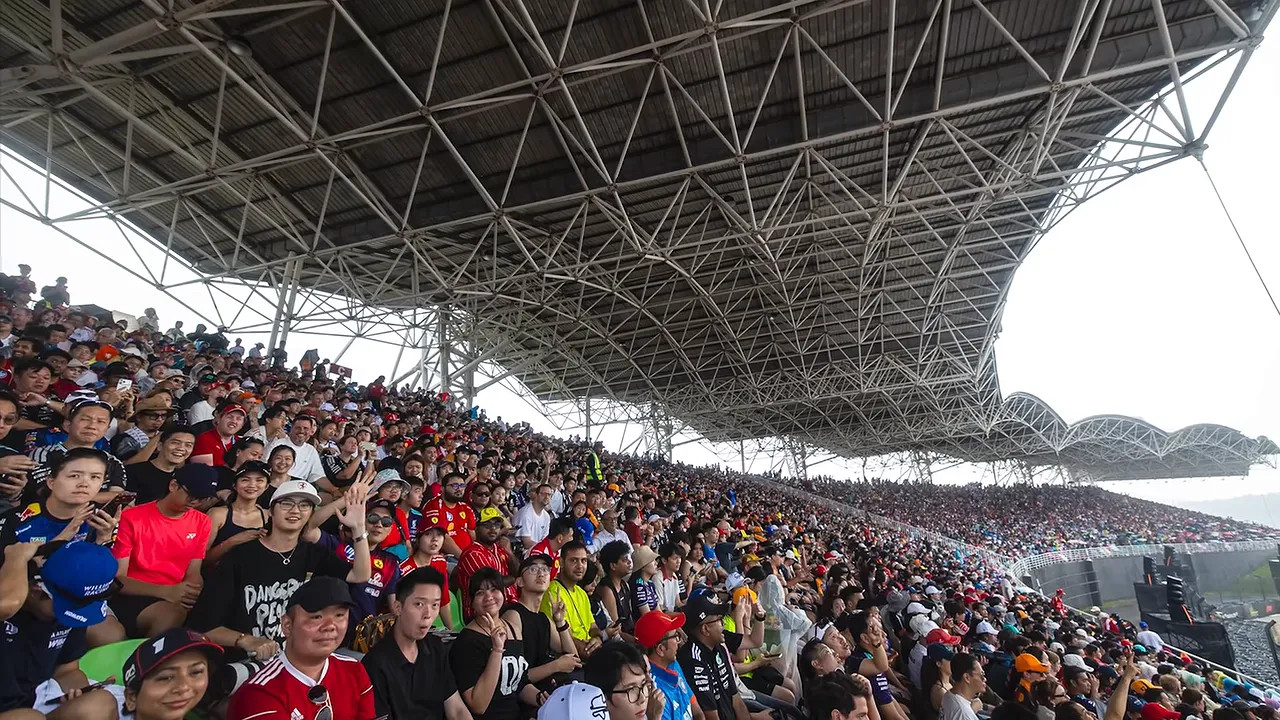
That context helps explain the pressure on transport, staffing and services. It does not make the problems acceptable, but it matters when assessing what happened.
A permanent Malaysian race would offer the opportunity to prepare much further ahead and build an operation around the actual local demand. The weekend demonstrated that interest in Formula 1 is huge. The support is there.
I also thought the crowd was remarkably tolerant. Despite the difficulties, the enthusiasm remained strong and helped make race day memorable. That goodwill is valuable, but it should not be treated as a substitute for getting the basics right.
The Racing Delivered, Even After a 90-Minute Delay
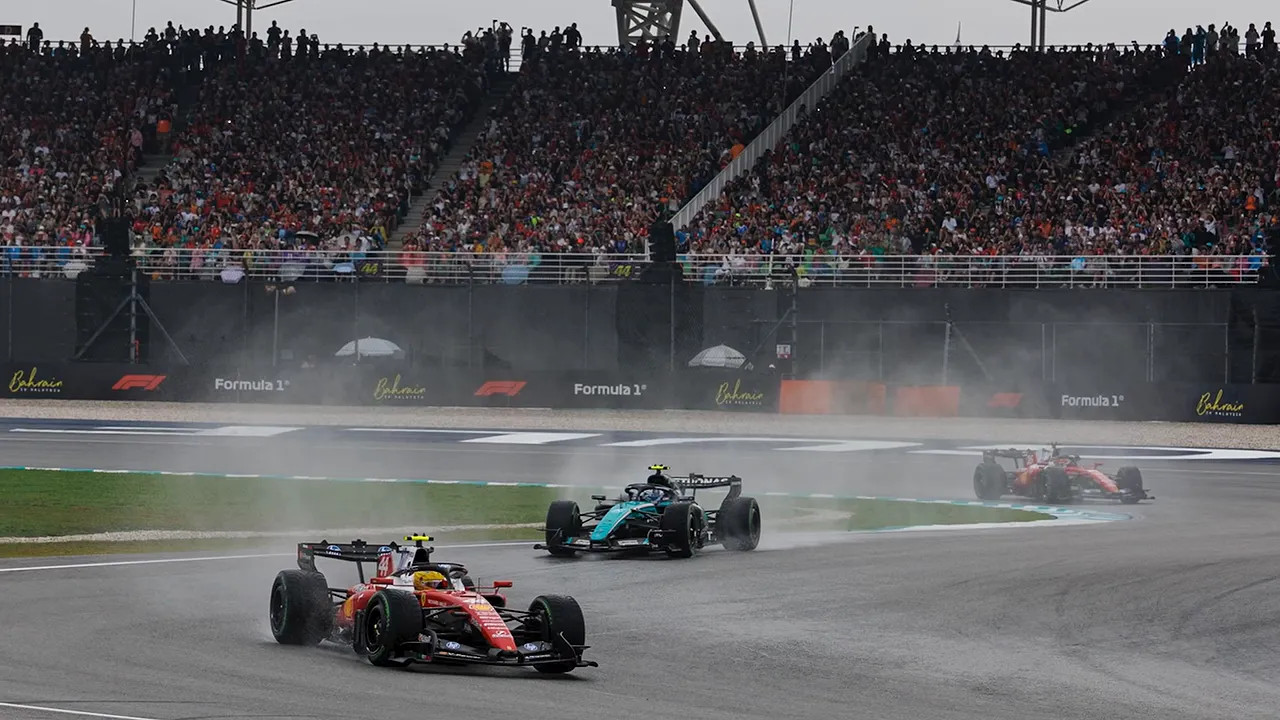
For all the problems outside the circuit, Sepang produced a tremendous spectacle on it. The atmosphere during the 90-minute race delay was particularly impressive. A DJ kept the grandstands singing and dancing, and the wait passed far more pleasantly than it might have.
The delay itself had a technical cause. The FIA explained that an unusual combination of conditions on the formation lap caused several cars to lose power unintentionally.
The contributing factors included:
- Low engine speed.
- Low grip in the wet conditions.
- Wet-weather energy management settings.
- The circuit’s sector configuration.
The solution was a software update distributed to every team. Once the teams had installed it, the race could start.
Rain had been forecast as a possibility throughout the weekend, but the eventual thunderstorm was still striking. It brought heavy rain, thunder and lightning, and provided the first proper wet running for these cars.
Once racing began, there was plenty happening. Max Verstappen returned to the top step of the podium, and the win also marked Ford’s first victory in its first full season as a major participant in the Red Bull engine project.
George Russell had a much less fortunate afternoon. His reaction afterwards was almost resigned amusement at another piece of bad luck. The result pushed him further behind Kimi Antonelli after he had been making ground, leaving his championship prospects looking increasingly remote.
That is the central distinction in any discussion of a Malaysian Grand Prix return: the track delivered. The supporting operation needs to catch up.
Paddock Details That Gave the Weekend Its Character
The Bahrain organizers brought a distinctive touch to the paddock on Saturday with a traditional tent and beautiful carpets. The setup was there for a Saturday-night function and lasted only a day, but it created a lovely setting for driver arrival photographs.

It gave a sense of Bahrain within Malaysia, which was clearly the intention. Bahrain’s race could not take place in its original early-season slot, and the organizers had invested heavily in staging it at Sepang instead.
There were smaller paddock talking points too. Ollie Bearman reportedly changed hotels in the early hours after being disturbed by a spider at Cyberview Resort. His travel team arranged a move to the Sama-Sama hotel. Spiders do not particularly bother me, having grown up around plenty in Australia, but evidently this was not a situation he wanted to stay in.
Lando Norris was again enjoying a Coke in the TV media pen after the race. Carlos Sainz attracted plenty of attention for a rather more unusual choice: fan-made Muay Thai boxing shorts.
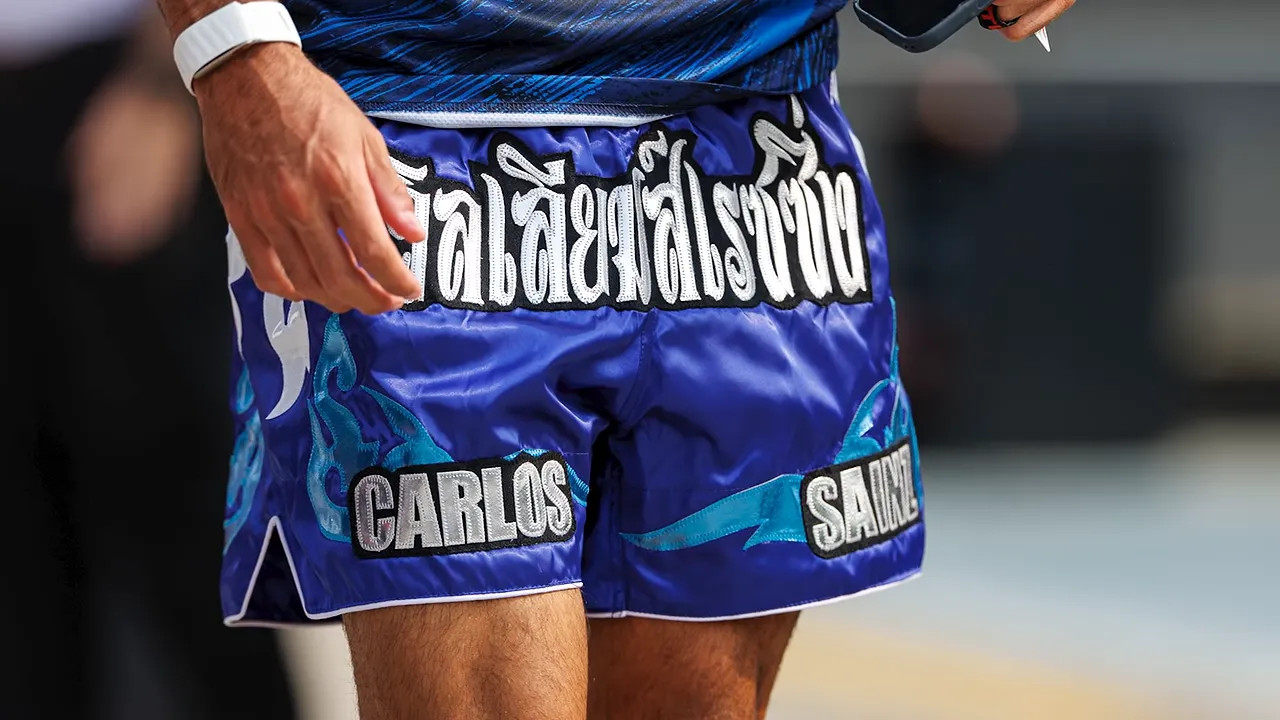
Several drivers were reportedly given pairs, and George Russell was photographed carrying his. Carlos deserves credit for actually wearing them into the paddock. He would have known they would attract attention as soon as he passed through the gates.
The heat was another constant feature of working at Sepang. Singapore has a similar climate, but much of the photography there takes place at night. Even a temperature difference of roughly 2 or 3 degrees, together with the absence of direct sun, makes a difference.
Here, working in the sunshine was a grind. Some local photographers covered themselves almost completely, including their faces and hands, to protect against the sun. I take my hat off to anyone working through those conditions.
A Few Interesting Cars Away From the Track
The paddock car park had its own points of interest. George Russell’s Mercedes was an impressive-looking vehicle, and it travelled with a police escort both to and from the circuit.

Andreas Stella’s choice surprised me: a Porsche Macan. My own transport was a Ford Everest, a big vehicle that I enjoyed driving. It would have been well suited to off-road work, although there was none of that on this trip.
The escorted journeys also highlighted the contrast with the experience of ordinary fans trying to leave. Interesting cars are one thing. Getting everyone home safely is quite another.
The Podium Had a Couple of Unusual Moments
The podium ceremony included an awkward pause of roughly 45 to 60 seconds before the national anthems played. About 15 seconds into the silence, the crowd supplied its own soundtrack with a Max Verstappen chant.
The anthems eventually started. It was a hiccup rather than a major issue, but I cannot recall another anthem delay of that length.
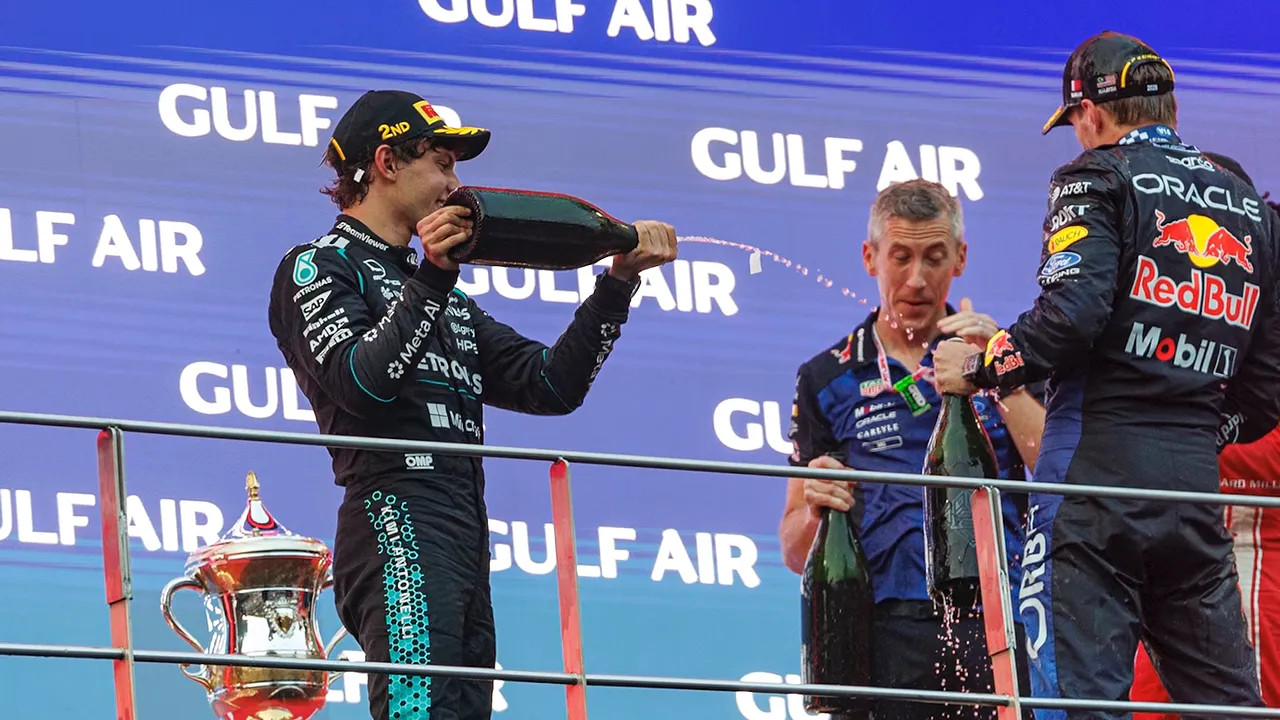
The bottles contained rosewater rather than champagne, preserving the Bahrain-style celebration. Malaysia’s legal drinking age is 21, which would have made an alcoholic podium drink a question for a younger winner such as Kimi Antonelli, but rosewater meant that issue did not arise.
It also produced a rather different photograph. Rosewater did not spray like champagne; it mostly trickled out. Lewis Hamilton moved away from the other drivers and the Red Bull representative during the celebration before returning for the group photograph. He appeared to leave relatively dry.
Can the Malaysian Grand Prix Return Permanently?
I think it could. The weekend showed why Sepang remains such an appealing Formula 1 venue, while making the priorities for a permanent return very clear.
The necessary work is practical:
- Transport: enough capacity, coordinated transfers and safe departures.
- Water: plentiful supplies, accessible refills and consistent entry rules.
- Food: stock and service that last through the main sessions.
- Entry: more screening capacity and shorter waits in the heat.
- Entertainment: ticket arrangements that genuinely encourage people to stay later.
The warmth of the reception stood out as much as the racing. The number of people who came over to speak with me exceeded even what I have experienced at Melbourne and Austin, 2 of my strongest markets. It was a striking indication of the interest in F1 and its photography in Malaysia.
The problems were serious, but they were fixable. Address them properly, and there is every reason to believe fans would return time and time again. Sepang does not need to prove it can produce a great race. It needs to make attending one a great experience from arrival to the journey home.
